
A Lahore-based retired Pakistan army major has emerged as a key link between the Mumbai terror attack suspect David Coleman Headley and his Pakistani handlers who guided him in planning and plotting strikes in India.
Senior Police Inspector Ramesh Mahale tells Sheela Bhatt that the Headley-Rana angle will not affect his case.
Pakistan-based terror group Lashkar-e-Tayiba was planning to use an American national to carry out a major terrorist attack in India, US investigating authorities said on Tuesday.
Tahawwur Hussain Rana, Mumbai attacks co-accused, had an ambitious plan to enter Bollywood by launching Rahul Bhatt, son of film director Mahesh Bhatt, in a movie that he wanted to make.
The trial of Pakistani-Canadian Tahawwur Hussain Rana, which began in Chicago on May 17, has witnessed its share of explosive revelations by prime witness David Coleman Headley.Both Rana and Headley are allegedly operatives of the Lashkar-e-Tayiba and had planned the terror strike in Mumbai along with the leaders of the terror outfit.Rana, a 50-year-old Chicago businessman, has been charged with planning the attacks, providing material support to the LeT.
Lashkar-e-Tayiba had initially scheduled the Mumbai terror attacks on September 29, but abandoned its plan as attackers got stuck on a rock and the boat in which they were travelling was destroyed, according to unsealed court documents.
Lashkar-e-Tayiba commander Sajid Mir's association with David Coleman Headley will be the primary focus of an investigation by the Federal Bureau of Investigation and Indian security agencies.
Indian investigators would join their Federal Bureau of Investigation counterparts on Monday to question David Coleman Headley, nabbed by FBI for plotting a major terror attack in India at LeT's behest, as fresh inputs indicated that he was planning to visit Pakistan this month.
Pakistan's Consul General in Chicago personally knew both David Coleman Headley and Tahawwur Hussain Rana, nabbed by the Federal Bureau of Investigation for planning to carry out a major terror attack in India at the behest of LeT, the US authorities have claimed.

Headley, 55, was pardoned on December 10 and made an approver by additional sessions judge G A Sanap who presides over special cases related to terrorism, including those under the now repealed Terrorists and Disruptive Activities (Prevention) Act.
The NIA, which has been on the trail of American terror operative David Coleman Headley, had been hoping to piece together the terror jig-saw by gaining independent access to Lashkar-e-Tayiba founder Zaki-ur-Rehman Lakhvi and Jamaat-ud-Dawah chief Hafiz Saeed, who are alleged to have masterminded the Mumbai carnage.

A multi-agency team has gone to the US and all paperwork and legal issues are being completed with US authorities to bring him to India, they said.
Speaking at a hearing of the Foreign Relations Committee, Maryland Democrat Ben Cardin, a member of the Senate Foreign Relations Committee, said: "There are mixed signals here that are very, very troubling and that the United States needs to be able to have alternatives for carrying out its foreign policy in that region."
Insisting that it had shared with India terror-related inputs it deemed were 'potentially credible' to its national security, the United States on Saturday said it was looking into media reports that Federal Bureau of Investigation had prior knowledge of David Coleman Headley's links with terror groups in Pakistan.
Chief Metropolitan Magistrate Kaveri Baweja allowed an application by the NIA seeking permission to examine Mohammed Aslam who was arrested by the Delhi Police's Special Cell from the national capital in August 2009.
Pakistani terrorist Ilyas Kashmiri belonging to the radical Harakat-ul Jihad Islami group has been indicted in a United States court for the first time in connection with a plot to target a Danish newspaper which had published offensive cartoons of Prophet Mohammad. Kashmiri was charged along with former Pakistani army major Abdur Rehman Hashim Syed, who had conspired with David Coleman Headley and Tahawwur Hussein Rana and planned to target Danish newspaper Jyllands-Posten.
In the first of a four-part series ProPublica's Sebastian Rotella reveals how David Coleman Headley turned from a United States Drug Enforcement Administration to a Lashkar-e-Tayiba operative, who played a key role in launching the most dreadful terror attack on Indian soil on November 26, 2008, and how America botched up chances to stop him.
Terror suspect Tahawwur Hussain Rana, under investigation for possible links to 26/11, has categorically denied any involvement in the Mumbai attacks, his lawyer said on Monday and asserted that the Pakistani-Canadian "harbours no ill-will" against Indians.
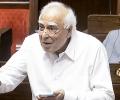
Rajya Sabha MP Kapil Sibal has congratulated both the previous UPA government and the current dispensation for the extradition of Tahawwur Hussain Rana, the mastermind behind the 2008 Mumbai attacks. Sibal expressed confidence that the extradition will shed light on the involvement of individuals within Pakistan's establishment in the attacks. Rana is being questioned by the National Investigation Agency (NIA) to uncover the full extent of the conspiracy behind the deadly 2008 terror strikes. Sibal highlighted the efforts of the UPA government in establishing the NIA and pursuing Rana's extradition, and also acknowledged the current government's success in bringing him back to India. The interrogation is expected to focus on Rana's potential ties to the Lashkar-e-Taiba (LeT) and his role in the Mumbai attacks.
Observing that those who died in the 26/11 Mumbai terror attacks deserve justice, federal prosecutors have urged the jury of a Chicago court to convict Tahawwur Hussein Rana as there is overwhelming evidence of his involvement. There was overwhelming evidence of Rana not only having knowledge of but also assisting and providing material support to his childhood friend David Coleman Headley in carrying out the attack in November 2008.
The verdict on Tahawwur Hussain Rana is expected by Wednesday. While India is eagerly awaiting the Chicago court's decision, investigators have chalked out a plan to ensure that a strong case is prepared against Pakistan and its Inter-Services agency in the 26/11 case. India may also push for Rana's extradition. Vicky Nanjappa reports
The status hearing of Pakistani born Canadian citizen Tahawwur Hussain Rana, co-accused with David Coleman Headley in the 2008 Mumbai terror attacks took in Chicago on Wednesday, even as his lawyer claimed that Indian government officials hadn't approached him yet for access.
Observing that Al Qaeda and its affiliates are still committed to striking the United States, a top American intelligence official has told US lawmakers that lone-wolf and homegrown extremist now poses an equally serious threat to the country.
'If India had used its diplomatic leverage after 26/11, we had lots in our favour but we abandoned it. The world thinks we are not serious about handling terror,' says security analyst Maroof Raza.
Two leading boarding schools located in prominent hill stations in a north Indian state and a few five star hotels in popular tourist spots are targets of Pakistan-based terror outfit Lashkar-e-Tayiba, a senior Home Ministry official said on Wednesday.
Pakistani-Canadian Tahawwur Hussain Rana was on Thursday acquitted by a US court on charges of abetting Mumbai terror attacks but was convicted for providing material support to the Lashkar-e-Tayiba and helping a terror plot in Denmark.
Tahawwur Rana was on Thursday held not guilty on charges of involvement in the 26/11 Mumbai attacks by a United States federal court which convicted him for providing material support to Pakistan-based terror group LeT and for plotting an attack in Denmark.

David Coleman Headley, the Pakistani-American Lashkar-e-Tayiba operative is being deposed before a Mumbai court on Monday through video conference.
NIA sources say that the questionnaire for Rana would be more on the lines of the one prepared for American terror operative David Coleman Headley, but there would be more additions to it once his testimony before the US court is complete
With the arrest of Lashkar-e-Tayiba operative David Coleman Headley the attack on the offices of Danish newspaper Jyllands-Posten that published the Prophet Mohammed cartoons was averted. But the masterminds of this attack are the ones who planned and executed the 26/11 strikes -- Sajid Mir, Abu Qahafa, Mazhar Iqbal and Major Iqbal. The US court may have named them conspirators in the Mumbai attacks, but the danger is far from over. They are still at large in Pakistan.
India's case against Lashkar-e-Tayiba operatives Tawwahur Rana and David Coleman Headly are in limbo since no decision has been taken on whether a team of the National Investigating Agency would be sent to the United States to question them. Rana and Headly were both accused of helping plan the 26/11 terror strike in Mumbai, in which several Americans were killed. While Headley turned into a prime witness for the Federal Bureau of Investigation, Rana was acquitted.
A 61-year-old American national, identified as Winston Marshal Carmichael, was detained at the Indira Gandhi International airport in New Delhi on late on Wednesday night minutes before he was to board a Qatar-bound flight after a knife was found in his hand baggage.
The Pakistani handlers of the Lashkar-e-Tayiba, who attacked Mumbai during the 26/11 terror attacks, wanted to obtain the release of captured gunman Ajmal Amir Kasab in exchange for the hostages held by the terrorists, an indictment chargesheet for two suspects has said.

Senior advocate Dayan Krishnan, who led India's arguments for the extradition of 26/11 accused Tahawwur Rana in a United States court, is set to lead the National Investigation Agency's (NIA) prosecution in Delhi.
The move will come in view of the busting of the Lashker-e-Tayiba plot, in which the Pakistan-based terror group was planning to use Pakistan-born US national David Coleman Headley and Canadian passport holder Tahawwur Hussain Rana to launch terror attacks in India.
The hearing of the bail application of Tahawwur Hussain Rana, a Pak-born Canadian citizen arrested on terrorist charges, has been postponed by a week.
The United States on Friday said it has briefed the Indian government about the progress made in the case of David Coleman Headley, who was nabbed by the Federal Bureau of Investigation in October, for plotting a major terror attack in India at the Lashkar-e-Tayiba's behest."I know that our ambassador (Tim Roemer) has briefed the government of India on the case, and we continue to follow the case," State Department spokesman Ian Kelly told.

David Coleman Headley and Tahawwur Hussain Rana, arrested last month by the Federal Bureau of Investigation, were part of a Lashkar-e-Tayiba plan of a major terror attack on the facilities of a Danish newspaper and the National Defence College in India, federal prosecutors have said.
The arrest of David Coleman Headley, an American national held on terror charges by the Federal Bureau of Investigation in Chicago earlier this month, is an indicator of the extent which the Lashkar-e-Tayiba could go up to carry an attack on Indian soil. The Lashkar is adopting new strategies to carry out terror strikes; and the latest one, according to the sources in the Intelligence Bureau, is the appointment of doctors.
While the prosecution and defence presented closing arguments in the trial of 26/11 accused Tahawwur Hussain Rana, the Pakistani-Canadian doctor chose to remain silent and did not take to the stand. Rana, a co-accused with David Coleman Headley in the Mumbai terror attacks, did not testify at his trial, as the federal jury was set to begin its deliberations.
